Buy securetechnologies.eu ?
We are moving the project
securetechnologies.eu .
Are you interested in purchasing the domain
securetechnologies.eu ?
domain@kv-gmbh.de · 0541-91531010
Buy securetechnologies.eu ?
Is it difficult to read 'Thinking, Fast and Slow'?
"Thinking, Fast and Slow" by Daniel Kahneman can be challenging to read for some people due to its dense content and complex concepts in behavioral psychology and decision-making. The book delves into cognitive biases and heuristics, which may require readers to pause and reflect on the information presented. However, Kahneman's writing style is engaging and he provides real-world examples to illustrate his points, making it easier for readers to grasp the concepts with some effort and focus. **
Can you make a presentation about "Thinking, Fast and Slow" by Daniel Kahneman?
"Thinking, Fast and Slow" by Daniel Kahneman is a groundbreaking book that explores the two systems that drive the way we think: the fast, intuitive, and emotional system, and the slow, deliberate, and logical system. The book delves into the cognitive biases and errors that affect our decision-making processes, and offers insights into how we can make better choices by understanding these systems. It also discusses the impact of these systems on various aspects of our lives, such as economics, psychology, and behavioral economics. Overall, "Thinking, Fast and Slow" provides a fascinating and thought-provoking look into the complexities of human thought and decision-making. **
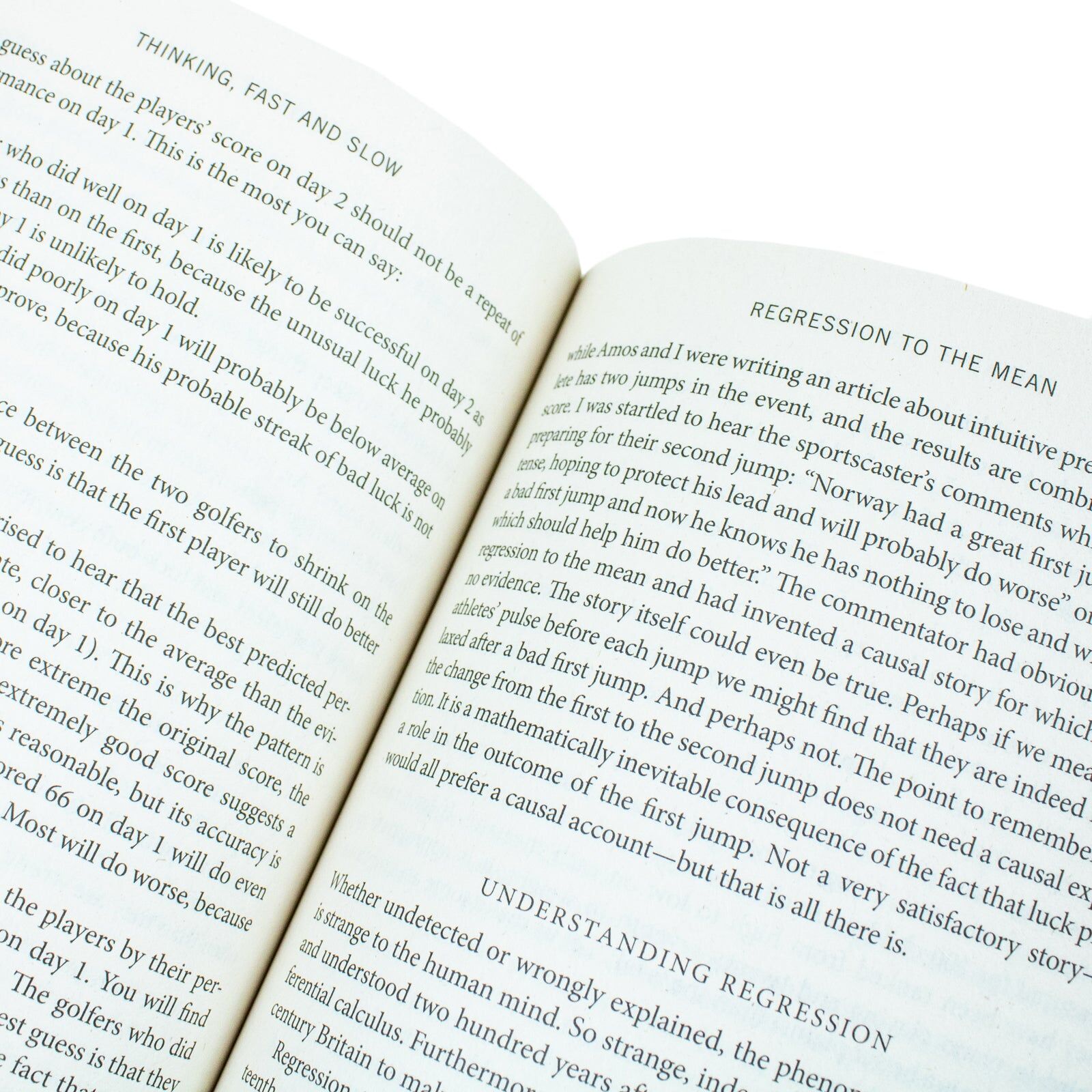
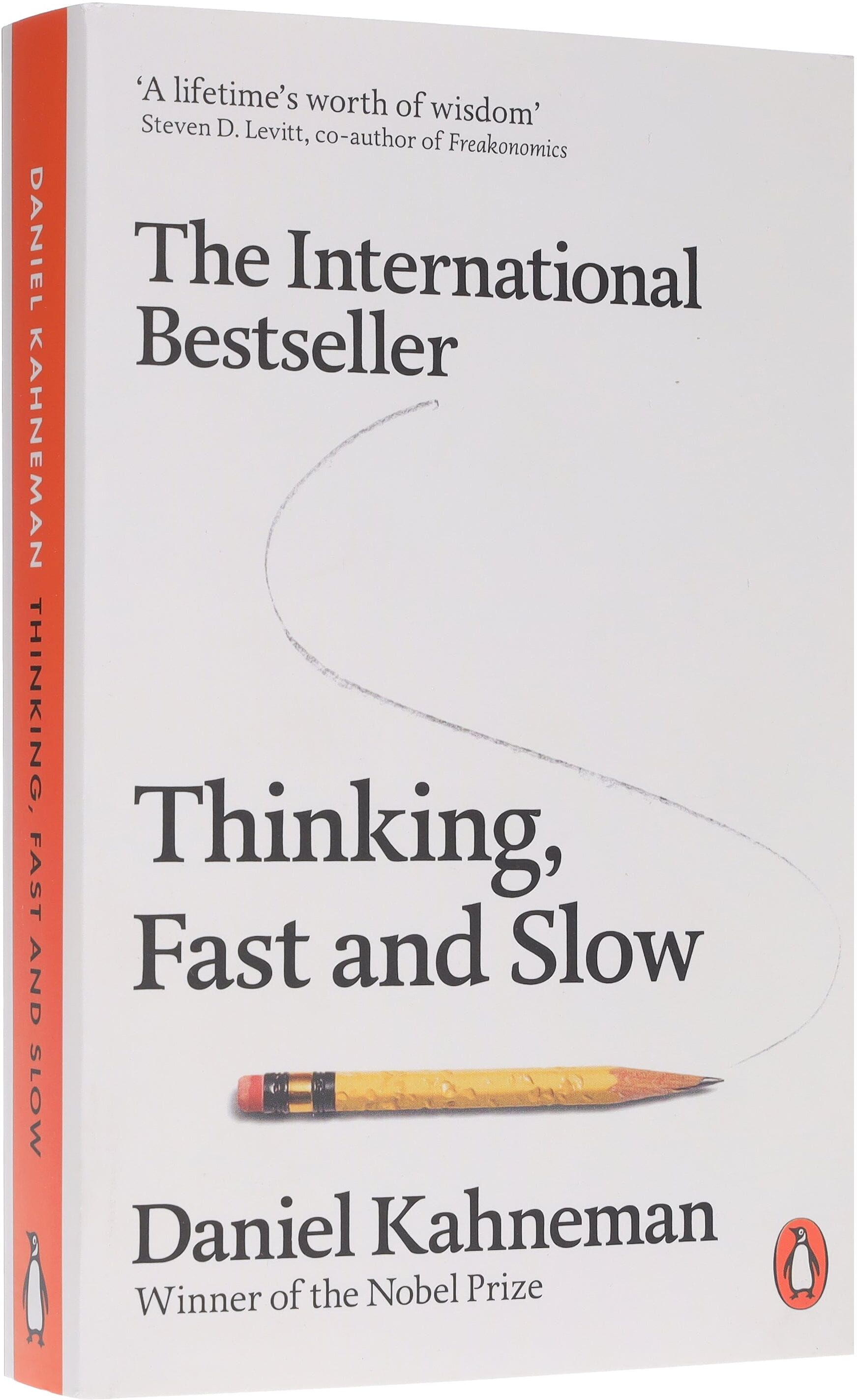
Similar search terms for Thinking-Fast-and-Slow
Top-Angebote
Products related to Thinking-Fast-and-Slow:
-
Penguin/HarperCollins Noise & Thinking Fast and Slow By Daniel Kahneman 2 Books Collection SetNoise & Thinking Fast and Slow By Daniel Kahneman 2 Books Collection Set: Noise: In Noise, Daniel Kahneman, Olivier Sibony and Cass R. Sunstein show how noise produces errors in many fields, including in medicine, law, public health, economic forecasting, forensic science, child protection, creative strategy, performance review and hiring. And although noise can be found wherever people are making judgements and decisions, individuals and organizations alike commonly ignore its impact, at great cost.Packed with new ideas, and drawing on the same kind of sharp analysis and breadth of case study that made Thinking, Fast and Slow and Nudge international bestsellers, Noise explains how and why humans are so susceptible to noise and bias in decision-making. Thinking Fast and Slow: Why is there more chance we'll believe something if it's in a bold type face? Why are judges more likely to deny parole before lunch? Why do we assume a good-looking person will be more competent? The answer lies in the two ways we make choices: fast, intuitive thinking, and slow, rational thinking. This book reveals how our minds are tripped up by error and prejudice (even when we think we are being logical), and gives you practical techniques for slower, smarter thinking. It will enable to you make better decisions at work, at home, and in everything you do.10,89 £*Shipping: 2,99 £Secure redirect to the provider
-
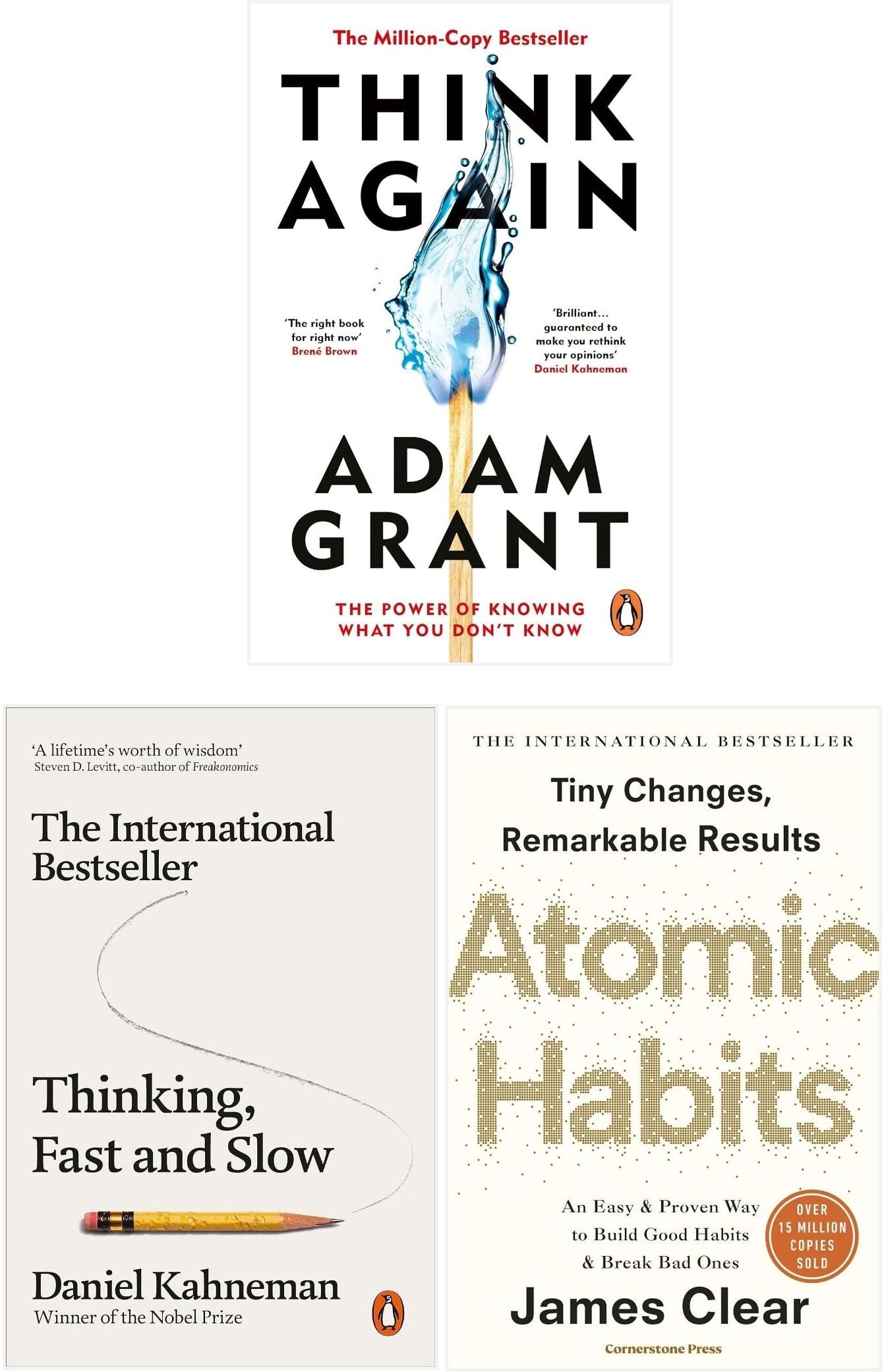
WH Allen/Random House Business/Penguin Think Again, Atomic Habits and Thinking, Fast and Slow 3 Books Collection SetThink Again by Adam Grant If you can change your mind you can do anything. Why do we refresh our wardrobes every year, renovate our kitchens every decade, but never update our beliefs and our views? Why do we laugh at people using computers that are ten years old, but yet still cling to opinions we formed ten years ago? There's a new skill for the modern world that matters more than raw intelligence - the ability to change your mind. To have the edge we all need to develop the flexibility to unlearn old beliefs and adapt when the evidence and the world changes before us. Atomic Habits by James Clear Transform your life with tiny changes in behaviour, starting now. People think that when you want to change your life, you need to think big. But world-renowned habits expert James Clear has discovered another way. He knows that real change comes from the compound effect of hundreds of small decisions: doing two push-ups a day, waking up five minutes early, or holding a single short phone call. He calls them atomic habits. Thinking, Fast and Slow by Daniel Kahneman Why do we make the decisions we do? Nobel Prize winner Daniel Kahneman revolutionised our understanding of human behaviour with Thinking, Fast and Slow. Distilling his life's work, Kahneman showed that there are two ways we make choices: fast, intuitive thinking, and slow, rational thinking. His book reveals how our minds are tripped up by error, bias and prejudice (even when we think we are being logical) and gives practical techniques that enable us all to improve our decision-making. This profound exploration of the marvels and limitations of the human mind has had a lasting impact on how we see ourselves.22,99 £*Shipping: 2,99 £Secure redirect to the provider
-
PENGUIN/RIVERHEAD BOOKS Messy (Hardback) By Tim Harford & Thinking Fast and Slow By Daniel Kahneman 2 Books Collection SetMessy (Hardback) By Tim Harford & Thinking Fast and Slow By Daniel Kahneman 2 Books Collection Set: Messy (Hardback) The urge to tidiness seems to be rooted deep in the human psyche. Many of us feel threatened by anything that is vague, unplanned, scattered around or hard to describe. We find comfort in having a script to rely on, a system to follow, in being able to categorise and file away.We all benefit from tidy organisation - up to a point. A large library needs a reference system. Global trade needs the shipping container. Scientific collaboration needs measurement units. But the forces of tidiness have marched too far. Thinking Fast and Slow Why is there more chance we'll believe something if it's in a bold type face? Why are judges more likely to deny parole before lunch? Why do we assume a good-looking person will be more competent? The answer lies in the two ways we make choices: fast, intuitive thinking, and slow, rational thinking. This book reveals how our minds are tripped up by error and prejudice (even when we think we are being logical), and gives you practical techniques for slower, smarter thinking. It will enable to you make better decisions at work, at home, and in everything you do.9,89 £*Shipping: 2,99 £Secure redirect to the provider
-
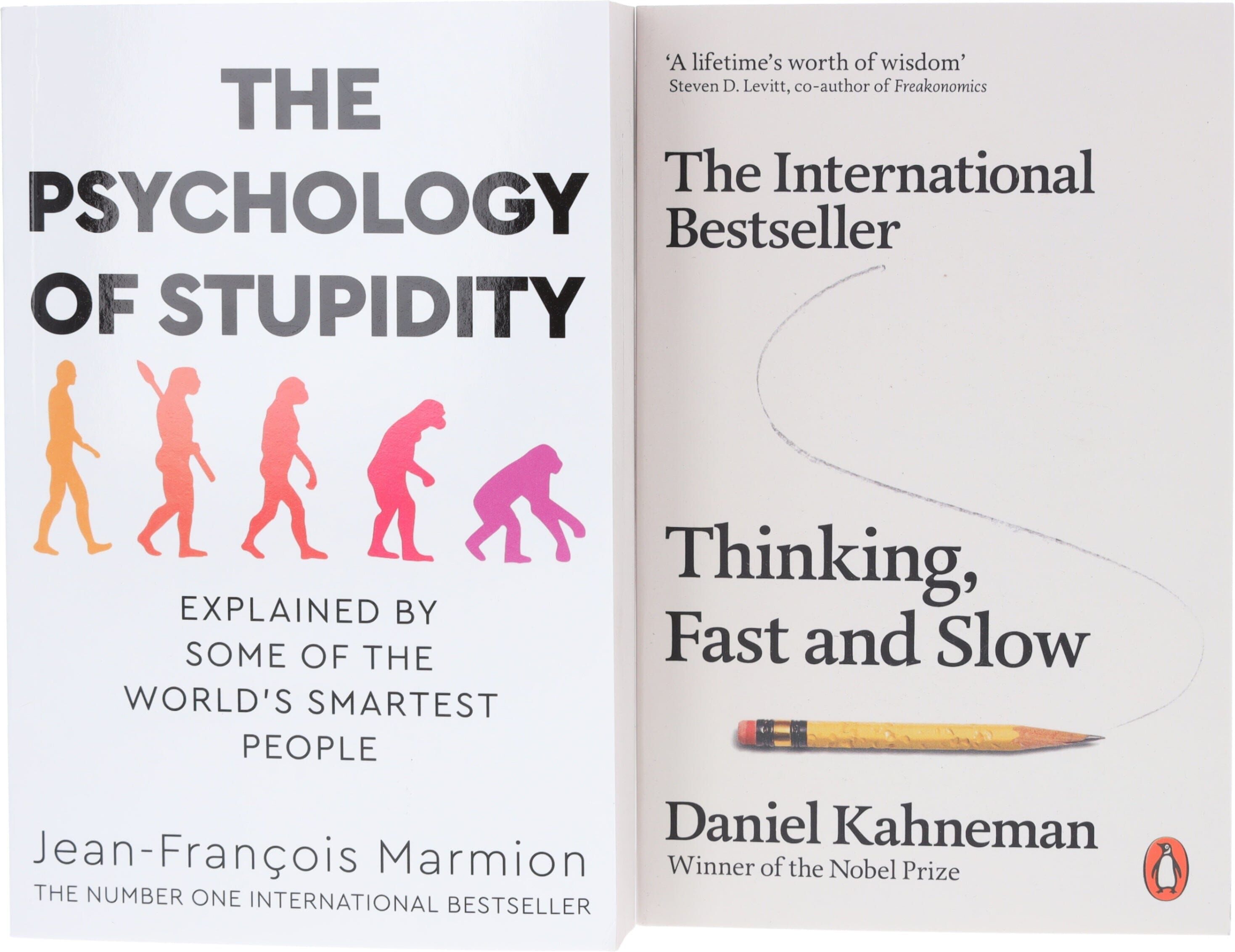
Thinking, Fast and Slow & The Psychology of Stupidity by Daniel Kahneman & Jean-Francois Marmion 2 Books Collection Set - Non Fiction - Paperback penguin/MacmillanTitles in this Set: 1. Thinking, Fast and Slow 2. The Psychology of Stupidity Description: Thinking, Fast and Slow Why is there more chance we'll believe something if it's in a bold type face? Why are judges more likely to deny parole before lunch? Why do we assume a good-looking person will be more competent? The answer lies in the two ways we make choices: fast, intuitive thinking, and slow, rational thinking. This book reveals how our minds are tripped up by error and prejudice (even when we think we are being logical), and gives you practical techniques for slower, smarter thinking, enabling you to make better decisions at work, at home, and in everything you do. The Psychology of Stupidity A comprehensive and witty exploration of human stupidity from some of the world’s smartest minds, including: Daniel Kahneman, Dan Ariely, Alison Gopnik, Howard Gardner, Antonio Damasio, Aaron James, Ryan Holiday and more, Stupidity is all around us, from the colleagues who won’t stop hitting ‘reply all’ to the former school friends posting conspiracy theories on Facebook. But in order to battle idiocy, we must first understand it. In The Psychology of Stupidity, some of the world’s leading psychologists and thinkers – including a Nobel Prize winner – will show you . . . · Why smart people sometimes believe in utter nonsense · How our lazy brains cause us to make the wrong decisions · Why trying to debate with fools is a trap · How media manipulation and Internet overstimulation makes us dumber · Why the stupidest people don’t think they’re stupid As long as there have been humans there has been human stupidity, but with wit and wisdom these great thinkers can help us understand this persistent human affliction.14,99 £*Shipping: 2,99 £Secure redirect to the provider
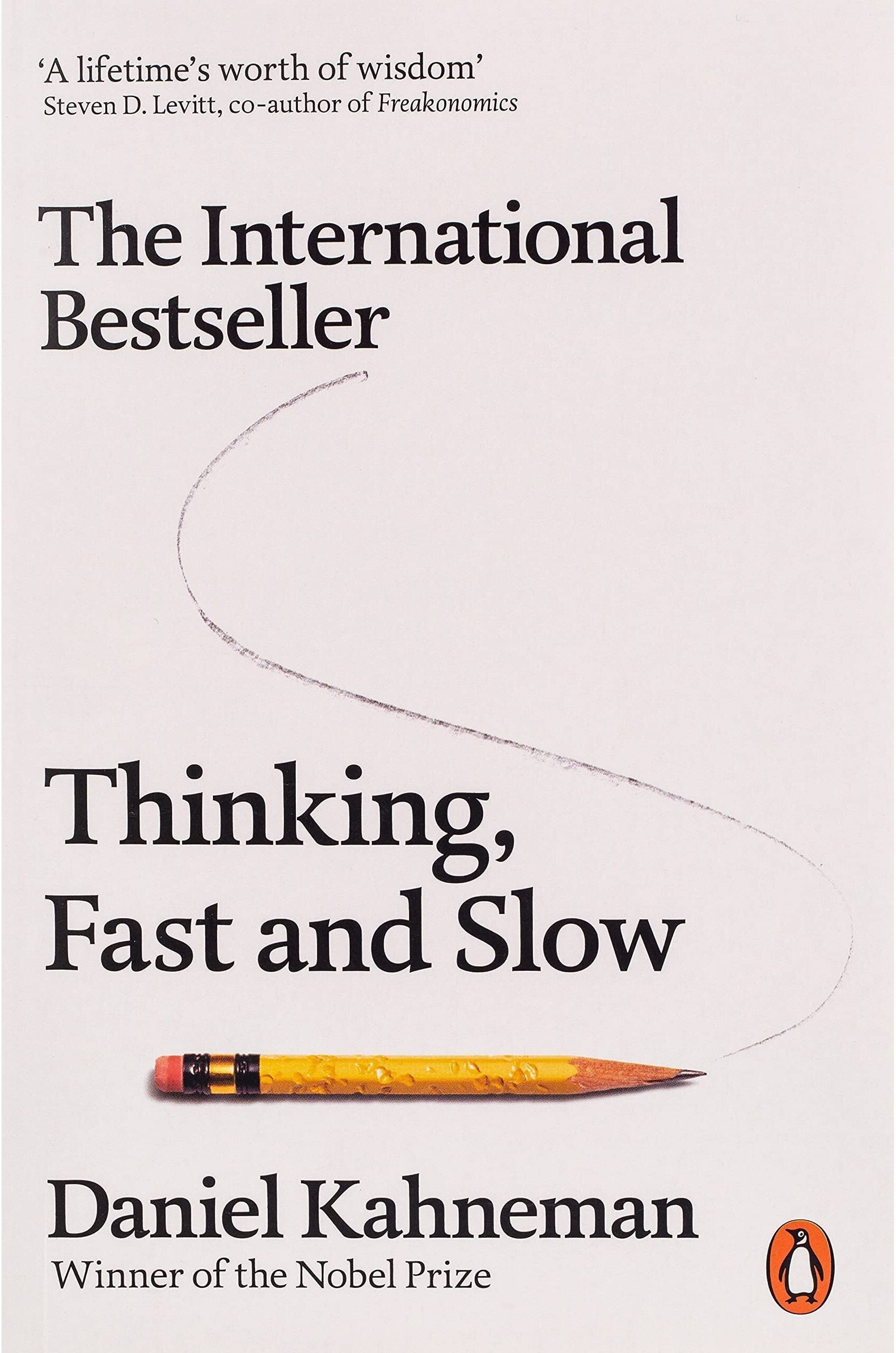

-
Is it difficult to read "Thinking, Fast and Slow" by Daniel Kahneman in English?
The difficulty of reading "Thinking, Fast and Slow" by Daniel Kahneman in English may vary depending on the reader's proficiency in the language. The book delves into complex psychological concepts and research findings, which may require a higher level of English comprehension. However, Kahneman's writing style is clear and accessible, making it easier for readers to grasp the concepts presented. Overall, while some readers may find certain sections challenging, others may find it relatively easy to follow. **
-
What are fast and slow axons?
Fast axons are nerve fibers that conduct electrical signals quickly, typically at speeds of up to 120 meters per second. These axons are often myelinated, meaning they are insulated by a fatty substance called myelin, which allows for rapid transmission of signals. Slow axons, on the other hand, conduct signals more slowly, typically at speeds of around 1 meter per second. These axons are often unmyelinated and are responsible for carrying less urgent or less time-sensitive signals within the nervous system. **
-
Am I slow in thinking?
It is important to remember that everyone's thinking speed is unique and can vary depending on the situation. If you feel like you are slow in thinking, it may be helpful to practice mindfulness techniques, engage in activities that stimulate your brain, and ensure you are getting enough rest and nutrition. It could also be beneficial to seek feedback from trusted individuals to gain a better understanding of your thinking speed. Remember, it is okay to take your time to process information and make thoughtful decisions. **
-
'Reader, slow or fast?'
As an AI, I don't have a preference for reading speed. However, some people prefer to read slowly to fully absorb and understand the content, while others prefer to read quickly to cover more material in a shorter amount of time. The best reading speed ultimately depends on the individual's comfort and comprehension level. It's important to find a pace that allows for both understanding and enjoyment of the material being read. **

Why are SSDs fast and programs slow?
SSDs are fast because they use flash memory to store data, allowing for quicker access times compared to traditional hard drives. On the other hand, programs can be slow due to various factors such as inefficient coding, large file sizes, or the need to access data from slower storage devices like HDDs. Additionally, programs may also be slowed down by the processing power of the computer or the amount of RAM available. **
Does the quartz clock run fast and slow?
No, the quartz clock does not typically run fast or slow. Quartz clocks are known for their accuracy and precision in timekeeping. The quartz crystal inside the clock oscillates at a constant frequency, ensuring that the clock maintains accurate timekeeping over long periods. Any variations in timekeeping are usually due to external factors such as battery life or mechanical issues, rather than the quartz crystal itself running fast or slow. **
Top-Angebote
Products related to Thinking-Fast-and-Slow:
-
Penguin Thinking, Fast and Slow by Daniel KahnemanWhy is there more chance we'll believe something if it's in a bold type face? Why are judges more likely to deny parole before lunch? Why do we assume a good-looking person will be more competent? The answer lies in the two ways we make choices: fast, intuitive thinking, and slow, rational thinking. This book reveals how our minds are tripped up by error and prejudice (even when we think we are being logical), and gives you practical techniques for slower, smarter thinking. It will enable to you make better decisions at work, at home, and in everything you do.7,99 £*Shipping: 2,99 £Secure redirect to the provider
-
Thinking, Fast and Slow By Daniel Kahneman - Non Fiction - Paperback Penguin Random HouseWhy is there more chance we'll believe something if it's in a bold type face? Why are judges more likely to deny parole before lunch? Why do we assume a good-looking person will be more competent? The answer lies in the two ways we make choices: fast, intuitive thinking, and slow, rational thinking. This book reveals how our minds are tripped up by error and prejudice (even when we think we are being logical), and gives you practical techniques for slower, smarter thinking, enabling you to make better decisions at work, at home, and in everything you do.11,95 £*Shipping: 2,99 £Secure redirect to the provider
-
Penguin/HarperCollins Noise & Thinking Fast and Slow By Daniel Kahneman 2 Books Collection SetNoise & Thinking Fast and Slow By Daniel Kahneman 2 Books Collection Set: Noise: In Noise, Daniel Kahneman, Olivier Sibony and Cass R. Sunstein show how noise produces errors in many fields, including in medicine, law, public health, economic forecasting, forensic science, child protection, creative strategy, performance review and hiring. And although noise can be found wherever people are making judgements and decisions, individuals and organizations alike commonly ignore its impact, at great cost.Packed with new ideas, and drawing on the same kind of sharp analysis and breadth of case study that made Thinking, Fast and Slow and Nudge international bestsellers, Noise explains how and why humans are so susceptible to noise and bias in decision-making. Thinking Fast and Slow: Why is there more chance we'll believe something if it's in a bold type face? Why are judges more likely to deny parole before lunch? Why do we assume a good-looking person will be more competent? The answer lies in the two ways we make choices: fast, intuitive thinking, and slow, rational thinking. This book reveals how our minds are tripped up by error and prejudice (even when we think we are being logical), and gives you practical techniques for slower, smarter thinking. It will enable to you make better decisions at work, at home, and in everything you do.10,89 £*Shipping: 2,99 £Secure redirect to the provider
-
WH Allen/Random House Business/Penguin Think Again, Atomic Habits and Thinking, Fast and Slow 3 Books Collection SetThink Again by Adam Grant If you can change your mind you can do anything. Why do we refresh our wardrobes every year, renovate our kitchens every decade, but never update our beliefs and our views? Why do we laugh at people using computers that are ten years old, but yet still cling to opinions we formed ten years ago? There's a new skill for the modern world that matters more than raw intelligence - the ability to change your mind. To have the edge we all need to develop the flexibility to unlearn old beliefs and adapt when the evidence and the world changes before us. Atomic Habits by James Clear Transform your life with tiny changes in behaviour, starting now. People think that when you want to change your life, you need to think big. But world-renowned habits expert James Clear has discovered another way. He knows that real change comes from the compound effect of hundreds of small decisions: doing two push-ups a day, waking up five minutes early, or holding a single short phone call. He calls them atomic habits. Thinking, Fast and Slow by Daniel Kahneman Why do we make the decisions we do? Nobel Prize winner Daniel Kahneman revolutionised our understanding of human behaviour with Thinking, Fast and Slow. Distilling his life's work, Kahneman showed that there are two ways we make choices: fast, intuitive thinking, and slow, rational thinking. His book reveals how our minds are tripped up by error, bias and prejudice (even when we think we are being logical) and gives practical techniques that enable us all to improve our decision-making. This profound exploration of the marvels and limitations of the human mind has had a lasting impact on how we see ourselves.22,99 £*Shipping: 2,99 £Secure redirect to the provider
-
Is it difficult to read 'Thinking, Fast and Slow'?
"Thinking, Fast and Slow" by Daniel Kahneman can be challenging to read for some people due to its dense content and complex concepts in behavioral psychology and decision-making. The book delves into cognitive biases and heuristics, which may require readers to pause and reflect on the information presented. However, Kahneman's writing style is engaging and he provides real-world examples to illustrate his points, making it easier for readers to grasp the concepts with some effort and focus. **
-
Can you make a presentation about "Thinking, Fast and Slow" by Daniel Kahneman?
"Thinking, Fast and Slow" by Daniel Kahneman is a groundbreaking book that explores the two systems that drive the way we think: the fast, intuitive, and emotional system, and the slow, deliberate, and logical system. The book delves into the cognitive biases and errors that affect our decision-making processes, and offers insights into how we can make better choices by understanding these systems. It also discusses the impact of these systems on various aspects of our lives, such as economics, psychology, and behavioral economics. Overall, "Thinking, Fast and Slow" provides a fascinating and thought-provoking look into the complexities of human thought and decision-making. **
-
Is it difficult to read "Thinking, Fast and Slow" by Daniel Kahneman in English?
The difficulty of reading "Thinking, Fast and Slow" by Daniel Kahneman in English may vary depending on the reader's proficiency in the language. The book delves into complex psychological concepts and research findings, which may require a higher level of English comprehension. However, Kahneman's writing style is clear and accessible, making it easier for readers to grasp the concepts presented. Overall, while some readers may find certain sections challenging, others may find it relatively easy to follow. **
-
What are fast and slow axons?
Fast axons are nerve fibers that conduct electrical signals quickly, typically at speeds of up to 120 meters per second. These axons are often myelinated, meaning they are insulated by a fatty substance called myelin, which allows for rapid transmission of signals. Slow axons, on the other hand, conduct signals more slowly, typically at speeds of around 1 meter per second. These axons are often unmyelinated and are responsible for carrying less urgent or less time-sensitive signals within the nervous system. **
Similar search terms for Thinking-Fast-and-Slow
-
PENGUIN/RIVERHEAD BOOKS Messy (Hardback) By Tim Harford & Thinking Fast and Slow By Daniel Kahneman 2 Books Collection SetMessy (Hardback) By Tim Harford & Thinking Fast and Slow By Daniel Kahneman 2 Books Collection Set: Messy (Hardback) The urge to tidiness seems to be rooted deep in the human psyche. Many of us feel threatened by anything that is vague, unplanned, scattered around or hard to describe. We find comfort in having a script to rely on, a system to follow, in being able to categorise and file away.We all benefit from tidy organisation - up to a point. A large library needs a reference system. Global trade needs the shipping container. Scientific collaboration needs measurement units. But the forces of tidiness have marched too far. Thinking Fast and Slow Why is there more chance we'll believe something if it's in a bold type face? Why are judges more likely to deny parole before lunch? Why do we assume a good-looking person will be more competent? The answer lies in the two ways we make choices: fast, intuitive thinking, and slow, rational thinking. This book reveals how our minds are tripped up by error and prejudice (even when we think we are being logical), and gives you practical techniques for slower, smarter thinking. It will enable to you make better decisions at work, at home, and in everything you do.9,89 £*Shipping: 2,99 £Secure redirect to the provider
-
Thinking, Fast and Slow & The Psychology of Stupidity by Daniel Kahneman & Jean-Francois Marmion 2 Books Collection Set - Non Fiction - Paperback penguin/MacmillanTitles in this Set: 1. Thinking, Fast and Slow 2. The Psychology of Stupidity Description: Thinking, Fast and Slow Why is there more chance we'll believe something if it's in a bold type face? Why are judges more likely to deny parole before lunch? Why do we assume a good-looking person will be more competent? The answer lies in the two ways we make choices: fast, intuitive thinking, and slow, rational thinking. This book reveals how our minds are tripped up by error and prejudice (even when we think we are being logical), and gives you practical techniques for slower, smarter thinking, enabling you to make better decisions at work, at home, and in everything you do. The Psychology of Stupidity A comprehensive and witty exploration of human stupidity from some of the world’s smartest minds, including: Daniel Kahneman, Dan Ariely, Alison Gopnik, Howard Gardner, Antonio Damasio, Aaron James, Ryan Holiday and more, Stupidity is all around us, from the colleagues who won’t stop hitting ‘reply all’ to the former school friends posting conspiracy theories on Facebook. But in order to battle idiocy, we must first understand it. In The Psychology of Stupidity, some of the world’s leading psychologists and thinkers – including a Nobel Prize winner – will show you . . . · Why smart people sometimes believe in utter nonsense · How our lazy brains cause us to make the wrong decisions · Why trying to debate with fools is a trap · How media manipulation and Internet overstimulation makes us dumber · Why the stupidest people don’t think they’re stupid As long as there have been humans there has been human stupidity, but with wit and wisdom these great thinkers can help us understand this persistent human affliction.14,99 £*Shipping: 2,99 £Secure redirect to the provider
-
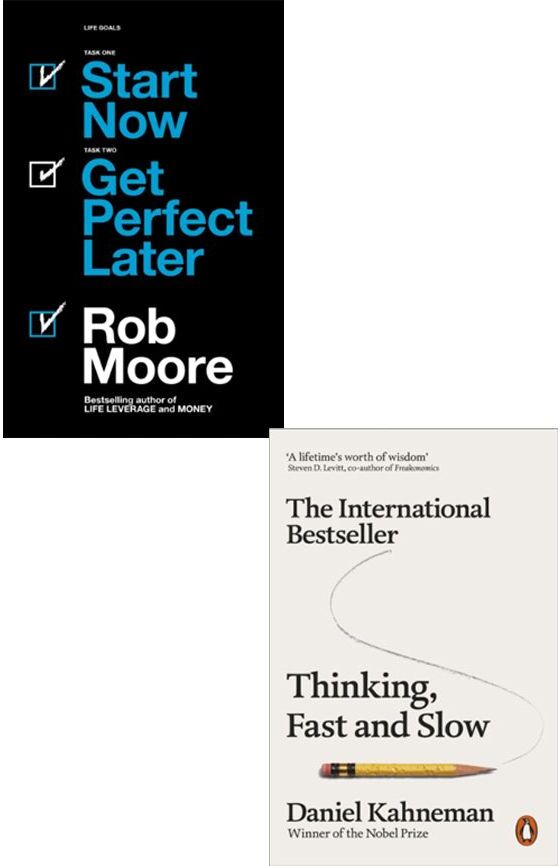
Penguin/John Murray Press Thinking, Fast and Slow By Daniel Kahneman & Start Now. Get Perfect Later by Rob Moore 2 Books Collection SetThinking, Fast and Slow By Daniel Kahneman & Start Now. Get Perfect Later by Rob Moore 2 Books Collection Set:Thinking Fast and Slow:Why is there more chance we'll believe something if it's in a bold type face? Why are judges more likely to deny parole before lunch? Why do we assume a good-looking person will be more competent? The answer lies in the two ways we make choices: fast, intuitive thinking, and slow, rational thinking. This book reveals how our minds are tripped up by error and prejudice (even when we think we are being logical), and gives you practical techniques for slower, smarter thinking. It will enable to you make better decisions at work, at home, and in everything you do.Start Now Get Perfect Later:Hardly anyone gets it right the first time, but many of us are crippled by indecision and fear of failure. The desire to get it right can inhibit us from getting started. In this book Rob Moore, the bestselling author of MONEY, shows that the quickest way to perfect is starting right now and improving as you go. This book will show you how to launch your business or idea, begin the next phase of your career, and overcome self-doubt - right away. Get perfect later, get started NOW.11,99 £*Shipping: 2,99 £Secure redirect to the provider
-
Scribe UK/Bluebird/Penguin Reinventing Your Life, How To Stay Sane The School of Life, Thinking Fast and Slow 3 Books Collection SetReinventing Your Life, How To Stay Sane The School of Life, Thinking Fast and Slow 3 Books Collection Set Reinventing Your Life: Unsatisfactory relationships, irrational lack of self-esteem, feelings of being unfulfilled -- these are all problems that can be solved by changing the types of messages that people internalise. These self-defeating behavior patterns are called lifetraps, and Reinventing Your Life shows you how to stop the cycle that keeps you from attaining happiness. Two of America's leading psychologists, Jeffrey E. Young, PhD, and Janet S. Klosko, PhD, draw on the breakthrough principles of cognitive therapy to help you recognise and change negative thought patterns, without the aid of drugs or long-term traditional therapy. How To Stay Sane The School of Life: By developing your self-observation skills, examining how you relate to others, breaking out of your comfort zone and exploring new ways of defining yourself, Philippa demonstrates that it is possible to become a little less tortured and a little more fulfilled. How to Stay Sane is at once a brilliant explanation of our minds and a profoundly useful guide to facing up to the many challenges life throws our way. Thinking Fast and Slow: Why is there more chance we'll believe something if it's in a bold type face? Why are judges more likely to deny parole before lunch? Why do we assume a good-looking person will be more competent? The answer lies in the two ways we make choices: fast, intuitive thinking, and slow, rational thinking17,95 £*Shipping: 2,99 £Secure redirect to the provider
-
Am I slow in thinking?
It is important to remember that everyone's thinking speed is unique and can vary depending on the situation. If you feel like you are slow in thinking, it may be helpful to practice mindfulness techniques, engage in activities that stimulate your brain, and ensure you are getting enough rest and nutrition. It could also be beneficial to seek feedback from trusted individuals to gain a better understanding of your thinking speed. Remember, it is okay to take your time to process information and make thoughtful decisions. **
-
'Reader, slow or fast?'
As an AI, I don't have a preference for reading speed. However, some people prefer to read slowly to fully absorb and understand the content, while others prefer to read quickly to cover more material in a shorter amount of time. The best reading speed ultimately depends on the individual's comfort and comprehension level. It's important to find a pace that allows for both understanding and enjoyment of the material being read. **
-
Why are SSDs fast and programs slow?
SSDs are fast because they use flash memory to store data, allowing for quicker access times compared to traditional hard drives. On the other hand, programs can be slow due to various factors such as inefficient coding, large file sizes, or the need to access data from slower storage devices like HDDs. Additionally, programs may also be slowed down by the processing power of the computer or the amount of RAM available. **
-
Does the quartz clock run fast and slow?
No, the quartz clock does not typically run fast or slow. Quartz clocks are known for their accuracy and precision in timekeeping. The quartz crystal inside the clock oscillates at a constant frequency, ensuring that the clock maintains accurate timekeeping over long periods. Any variations in timekeeping are usually due to external factors such as battery life or mechanical issues, rather than the quartz crystal itself running fast or slow. **
* All prices are inclusive of VAT and, if applicable, plus shipping costs. The offer information is based on the details provided by the respective shop and is updated through automated processes. Real-time updates do not occur, so deviations can occur in individual cases. ** Note: Parts of this content were created by AI.