Buy securetechnologies.eu ?
We are moving the project
securetechnologies.eu .
Are you interested in purchasing the domain
securetechnologies.eu ?
domain@kv-gmbh.de · 0541-91531010
Buy securetechnologies.eu ?
Doesn't IPv4 change?
IPv4 does not change in the sense that it is a fixed set of rules and protocols that define how devices communicate on a network. However, individual IPv4 addresses can change as they are assigned dynamically by internet service providers or network administrators. Additionally, advancements in technology have led to the development of IPv6, which is a newer version of the Internet Protocol that offers more available addresses and improved features compared to IPv4. **
Doesn't IPv4 work, only IPv6?
No, both IPv4 and IPv6 are used for communication over the internet. IPv4 is the older version and is still widely used, but it is running out of available addresses due to the increasing number of devices connecting to the internet. IPv6 was developed to address this issue by providing a much larger pool of available addresses. Both IPv4 and IPv6 can coexist and are used simultaneously in many networks. **

Similar search terms for IPv4
Top-Angebote
Products related to IPv4:


-
Are IPv4 and IPv6 separate?
Yes, IPv4 and IPv6 are separate and distinct protocols for identifying and addressing devices on a network. IPv4 is the older and more widely used protocol, while IPv6 is the newer and more advanced protocol designed to address the limitations of IPv4, such as the exhaustion of available addresses. Both protocols can coexist on the same network, but they are not directly compatible with each other. **
-
Why is IPv4 not connected?
IPv4 is not connected because it is a protocol used to identify and locate devices on a network, but it does not have built-in security features to protect against cyber threats. Additionally, IPv4 has a limited number of available IP addresses, which has led to the development and adoption of IPv6 to accommodate the growing number of devices connected to the internet. As a result, IPv4 is gradually being phased out in favor of IPv6, which offers improved security and a larger address space. **
-
What is an IPv4 address?
An IPv4 address is a numerical label assigned to each device connected to a computer network that uses the Internet Protocol for communication. It consists of a series of four numbers separated by periods, with each number ranging from 0 to 255. IPv4 addresses are used to uniquely identify devices on a network and enable them to communicate with each other. Due to the limited number of available IPv4 addresses, the newer IPv6 protocol has been developed to accommodate the growing number of devices connected to the internet. **
-
Why are there no IPv4 addresses?
There are no IPv4 addresses left because the pool of available IPv4 addresses has been exhausted due to the rapid growth of the internet and the increasing number of devices connected to it. This scarcity has led to the adoption of IPv6, which has a much larger address space, allowing for an almost unlimited number of unique addresses to accommodate the growing demand for internet-connected devices. IPv6 also offers other advantages such as improved security and efficiency, making it a more sustainable solution for the future of the internet. **

Can you change IPv6 to IPv4?
No, you cannot directly change IPv6 to IPv4. IPv6 and IPv4 are two different network protocols with distinct addressing schemes. IPv6 was developed to address the limitations of IPv4, such as the exhaustion of available IPv4 addresses. To switch from IPv6 to IPv4, you would need to reconfigure your network infrastructure and devices to use IPv4 addresses instead of IPv6. **
What are IPv6 and IPv4 addresses?
IPv6 and IPv4 addresses are numerical labels assigned to devices connected to a network to identify and locate them. IPv4 addresses are 32-bit numerical labels separated by periods, while IPv6 addresses are 128-bit numerical labels separated by colons. IPv4 addresses are running out due to the increasing number of devices connected to the internet, leading to the development and adoption of IPv6 addresses to accommodate the growing demand for unique addresses. **
Top-Angebote
Products related to IPv4:
-
Doesn't IPv4 change?
IPv4 does not change in the sense that it is a fixed set of rules and protocols that define how devices communicate on a network. However, individual IPv4 addresses can change as they are assigned dynamically by internet service providers or network administrators. Additionally, advancements in technology have led to the development of IPv6, which is a newer version of the Internet Protocol that offers more available addresses and improved features compared to IPv4. **
-
Doesn't IPv4 work, only IPv6?
No, both IPv4 and IPv6 are used for communication over the internet. IPv4 is the older version and is still widely used, but it is running out of available addresses due to the increasing number of devices connecting to the internet. IPv6 was developed to address this issue by providing a much larger pool of available addresses. Both IPv4 and IPv6 can coexist and are used simultaneously in many networks. **
-
Are IPv4 and IPv6 separate?
Yes, IPv4 and IPv6 are separate and distinct protocols for identifying and addressing devices on a network. IPv4 is the older and more widely used protocol, while IPv6 is the newer and more advanced protocol designed to address the limitations of IPv4, such as the exhaustion of available addresses. Both protocols can coexist on the same network, but they are not directly compatible with each other. **
-
Why is IPv4 not connected?
IPv4 is not connected because it is a protocol used to identify and locate devices on a network, but it does not have built-in security features to protect against cyber threats. Additionally, IPv4 has a limited number of available IP addresses, which has led to the development and adoption of IPv6 to accommodate the growing number of devices connected to the internet. As a result, IPv4 is gradually being phased out in favor of IPv6, which offers improved security and a larger address space. **
Similar search terms for IPv4
-
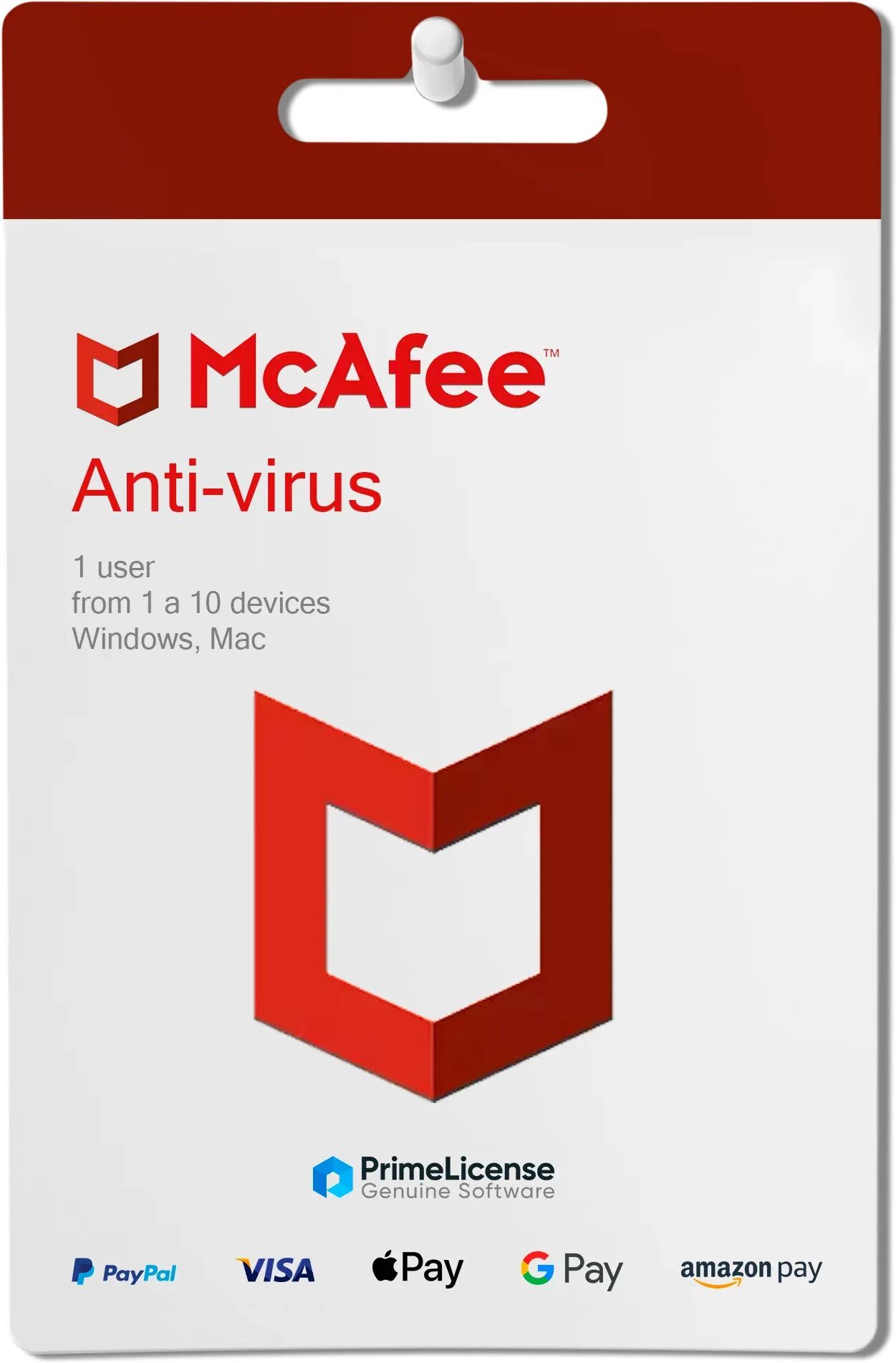
Mcafee Antivirus - 1 YearMcAfee Antivirus is a cybersecurity solution developed by the company of the same name. The software with original digital licence offers protection against malware, viruses, ransomware and other online threats, and is designed for both domestic and professional use. Thanks to its advanced features, McAfee Antivirus keeps your device and personal information safe for the entire duration of your annual subscription. The licence is delivered via email within a few minutes of purchase. What is included in the McAfee Antivirus subscription The subscription version of McAfee Antivirus lasts one year and is scalable across 1, 3, 5 or 10 Windows, macOS, Android and iOS devices. Regardless of the number of devices you choose, the subscription includes the following features: Real-time protection: continuous system monitoring searching for suspicious activity or threats. McAfee Antivirus analyses files, emails and web traffic to block threats before they can damage your device. Malware detection and removal: scanning engine that detects and removes viruses, trojans, spyware, adware and worms. Deep scans also identify malicious software hidden in less exposed areas of the system. Ransomware protection: proactive blocking of ransomware attacks, with safeguarding of personal files and prevention of unauthorised encryption or data loss. Integrated firewall: additional layer of defence that blocks unauthorised access and prevents hackers from compromising your device. Why choose McAfee Antivirus McAfee Antivirus is designed for those seeking essential and reliable protection at a reasonable cost, with the flexibility to cover 1 to 10 devices with a single licence. The subscription model allows you to cancel the service without additional costs when no longer needed, and automatic updates ensure that the software remains effective against the latest threats. The product integrates well in both domestic settings, for the protection of one or few family devices, and in professional settings on single workstations or small networks up to 10 endpoints. Multi-platform compatibility (Windows, macOS, Android, iOS) allows you to protect computers and smartphones with the same licence. McAfee Antivirus versions: which one to choose McAfee Antivirus is the entry-level tier of the range. To assess whether the base version is sufficient for your needs or whether you need a more complete suite, compare the features in the table below. Version Compatibility Users Payment Features McAfee Antivirus Windows, macOS, Android, iOS 1 user (1–10 devices) Subscription (1 year) Real-time protection from viruses and malware, ransomware protection, basic firewall McAfee Internet Security Windows, macOS, Android, iOS 1 user (1–10 devices) Subscription (1 year) Everything in McAfee Antivirus, plus web and email protection and limited Wi-Fi privacy McAfee Total Protection Windows, macOS, Android, iOS 1 user (1–10 devices) Subscription (1 year) Everything in Internet Security, plus password...16,90 £*Shipping: 0,00 £Secure redirect to the provider
-
What is an IPv4 address?
An IPv4 address is a numerical label assigned to each device connected to a computer network that uses the Internet Protocol for communication. It consists of a series of four numbers separated by periods, with each number ranging from 0 to 255. IPv4 addresses are used to uniquely identify devices on a network and enable them to communicate with each other. Due to the limited number of available IPv4 addresses, the newer IPv6 protocol has been developed to accommodate the growing number of devices connected to the internet. **
-
Why are there no IPv4 addresses?
There are no IPv4 addresses left because the pool of available IPv4 addresses has been exhausted due to the rapid growth of the internet and the increasing number of devices connected to it. This scarcity has led to the adoption of IPv6, which has a much larger address space, allowing for an almost unlimited number of unique addresses to accommodate the growing demand for internet-connected devices. IPv6 also offers other advantages such as improved security and efficiency, making it a more sustainable solution for the future of the internet. **
-
Can you change IPv6 to IPv4?
No, you cannot directly change IPv6 to IPv4. IPv6 and IPv4 are two different network protocols with distinct addressing schemes. IPv6 was developed to address the limitations of IPv4, such as the exhaustion of available IPv4 addresses. To switch from IPv6 to IPv4, you would need to reconfigure your network infrastructure and devices to use IPv4 addresses instead of IPv6. **
-
What are IPv6 and IPv4 addresses?
IPv6 and IPv4 addresses are numerical labels assigned to devices connected to a network to identify and locate them. IPv4 addresses are 32-bit numerical labels separated by periods, while IPv6 addresses are 128-bit numerical labels separated by colons. IPv4 addresses are running out due to the increasing number of devices connected to the internet, leading to the development and adoption of IPv6 addresses to accommodate the growing demand for unique addresses. **
* All prices are inclusive of VAT and, if applicable, plus shipping costs. The offer information is based on the details provided by the respective shop and is updated through automated processes. Real-time updates do not occur, so deviations can occur in individual cases. ** Note: Parts of this content were created by AI.