Buy securetechnologies.eu ?
We are moving the project
securetechnologies.eu .
Are you interested in purchasing the domain
securetechnologies.eu ?
domain@kv-gmbh.de · 0541-91531010
Buy securetechnologies.eu ?
What are the differences between covalent bonds, metallic bonds, and ionic bonds?
Covalent bonds are formed when two atoms share electrons, resulting in a strong bond between the atoms. Metallic bonds occur between metal atoms, where the electrons are delocalized and free to move throughout the structure, creating a strong bond. Ionic bonds are formed between a metal and a nonmetal, where one atom transfers electrons to the other, resulting in the formation of positively and negatively charged ions that are attracted to each other. Overall, covalent bonds involve electron sharing, metallic bonds involve electron delocalization, and ionic bonds involve electron transfer. **
Do CO bonds form with other CO bonds?
No, CO bonds do not typically form with other CO bonds. Carbon monoxide (CO) is a stable molecule with a triple bond between the carbon and oxygen atoms. This triple bond is strong and does not readily form additional bonds with other CO molecules. Instead, CO molecules tend to interact with other types of molecules through various types of chemical reactions. **


Similar search terms for Bonds
Top-Angebote
Products related to Bonds:
-
milk_shake Everlasting Bonds Leave In Treatment 100mLA hair-care product. It a lightweight leave-in treatment designed to enhance your hair's softness, shine, and manageability without adding weight. This innovative formula provides heat protection up to 230°C, making it ideal for styling while addressing hair damage and promoting a healthier appearance.31,97 £*Shipping: 5,34 £Secure redirect to the provider
-
milk_shake Everlasting Bonds Shampoo for Damaged Hair 300mLA shampoo. Everlasting Bonds Shampoo is a transformative hair care solution designed to restore strength, softness, and resilience to damaged and stressed hair. This gentle yet effective cleanser not only repairs weakened hair bonds but also removes impurities without stripping the hair of its natural moisture.23,98 £*Shipping: 7,11 £Secure redirect to the provider
-
Inspired Finds Eternal Bonds Personalized Acrylic Photo Frame & Custom Couple Plaque Gift warm LightCapture Your Timeless Connection. Turn your most meaningful moments into a lasting keepsake with this elegant personalized acrylic photo frame. Designed specifically for couples who value memories that matter, this sleek, transparent display piece...110,99 $*Shipping: 0,00 $Secure redirect to the provider
-
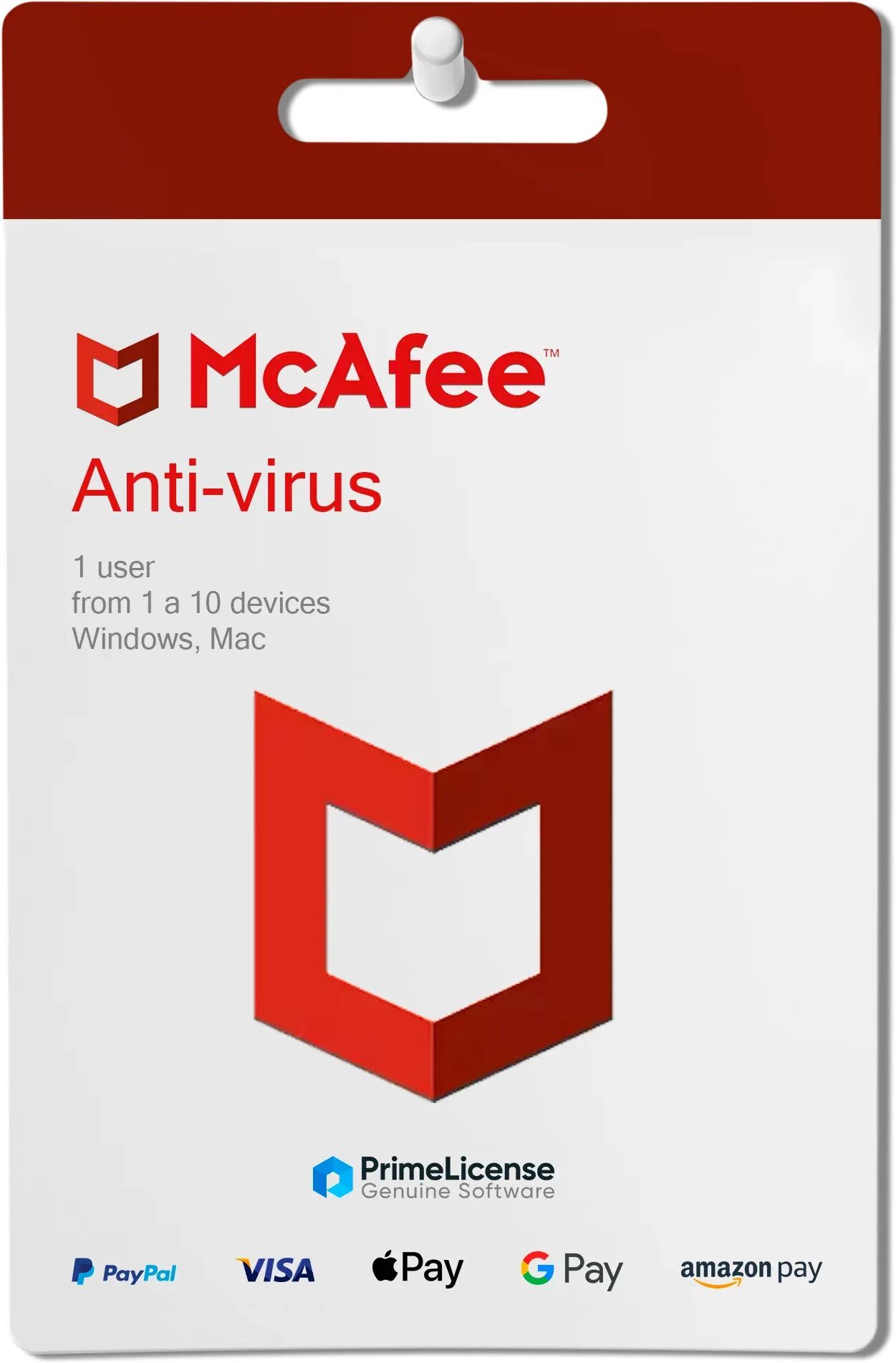
Mcafee Antivirus - 1 YearMcAfee Antivirus is a cybersecurity solution developed by the company of the same name. The software with original digital licence offers protection against malware, viruses, ransomware and other online threats, and is designed for both domestic and professional use. Thanks to its advanced features, McAfee Antivirus keeps your device and personal information safe for the entire duration of your annual subscription. The licence is delivered via email within a few minutes of purchase. What is included in the McAfee Antivirus subscription The subscription version of McAfee Antivirus lasts one year and is scalable across 1, 3, 5 or 10 Windows, macOS, Android and iOS devices. Regardless of the number of devices you choose, the subscription includes the following features: Real-time protection: continuous system monitoring searching for suspicious activity or threats. McAfee Antivirus analyses files, emails and web traffic to block threats before they can damage your device. Malware detection and removal: scanning engine that detects and removes viruses, trojans, spyware, adware and worms. Deep scans also identify malicious software hidden in less exposed areas of the system. Ransomware protection: proactive blocking of ransomware attacks, with safeguarding of personal files and prevention of unauthorised encryption or data loss. Integrated firewall: additional layer of defence that blocks unauthorised access and prevents hackers from compromising your device. Why choose McAfee Antivirus McAfee Antivirus is designed for those seeking essential and reliable protection at a reasonable cost, with the flexibility to cover 1 to 10 devices with a single licence. The subscription model allows you to cancel the service without additional costs when no longer needed, and automatic updates ensure that the software remains effective against the latest threats. The product integrates well in both domestic settings, for the protection of one or few family devices, and in professional settings on single workstations or small networks up to 10 endpoints. Multi-platform compatibility (Windows, macOS, Android, iOS) allows you to protect computers and smartphones with the same licence. McAfee Antivirus versions: which one to choose McAfee Antivirus is the entry-level tier of the range. To assess whether the base version is sufficient for your needs or whether you need a more complete suite, compare the features in the table below. Version Compatibility Users Payment Features McAfee Antivirus Windows, macOS, Android, iOS 1 user (1–10 devices) Subscription (1 year) Real-time protection from viruses and malware, ransomware protection, basic firewall McAfee Internet Security Windows, macOS, Android, iOS 1 user (1–10 devices) Subscription (1 year) Everything in McAfee Antivirus, plus web and email protection and limited Wi-Fi privacy McAfee Total Protection Windows, macOS, Android, iOS 1 user (1–10 devices) Subscription (1 year) Everything in Internet Security, plus password...16,90 £*Shipping: 0,00 £Secure redirect to the provider



-
Why are intermolecular bonds weaker than electron pair bonds?
Intermolecular bonds are weaker than electron pair bonds because they involve interactions between molecules rather than within a single molecule. In intermolecular bonds, the attractive forces between molecules are generally weaker than the covalent bonds that hold atoms together within a molecule. Additionally, intermolecular bonds are typically temporary and can be easily broken, whereas electron pair bonds are strong and stable. Overall, the weaker nature of intermolecular bonds allows molecules to move and interact with each other more freely. **
-
Why are intermolecular bonds generally weaker than covalent bonds?
Intermolecular bonds are generally weaker than covalent bonds because they involve interactions between molecules rather than within a single molecule. Covalent bonds involve the sharing of electrons between atoms, creating strong bonds within a molecule. In contrast, intermolecular bonds, such as hydrogen bonds or van der Waals forces, are weaker because they are based on temporary interactions between molecules, which can be easily broken. Additionally, intermolecular bonds are influenced by factors such as distance and orientation, further contributing to their weaker nature compared to covalent bonds. **
-
Why are intermolecular bonds typically weaker than covalent bonds?
Intermolecular bonds are typically weaker than covalent bonds because they involve interactions between molecules rather than within a single molecule. In intermolecular bonds, the attractive forces between molecules, such as van der Waals forces or hydrogen bonding, are weaker than the strong sharing of electrons in covalent bonds. Additionally, intermolecular bonds are more easily broken or disrupted by changes in temperature or pressure, leading to lower bond energies compared to covalent bonds. **
-
Why are intermolecular bonds typically weaker than electron pair bonds?
Intermolecular bonds are typically weaker than electron pair bonds because they involve interactions between molecules rather than within a single molecule. In intermolecular bonds, the attractive forces between molecules are generally weaker than the covalent bonds that hold atoms together within a molecule. Additionally, intermolecular bonds are usually based on weaker forces such as van der Waals forces, hydrogen bonding, or dipole-dipole interactions, which are not as strong as the sharing or transfer of electrons in covalent or ionic bonds. **
Why are intermolecular bonds generally weaker than electron pair bonds?
Intermolecular bonds are generally weaker than electron pair bonds because they involve interactions between molecules, which are larger and less localized than the interactions between atoms in a covalent bond. In intermolecular bonds, the attractive forces are typically weaker due to the larger distance between molecules and the lack of direct sharing of electrons. In contrast, electron pair bonds involve the sharing of electrons between atoms, leading to stronger and more localized bonding interactions. **
Why are polar bonds lower in energy than nonpolar bonds?
Polar bonds are lower in energy than nonpolar bonds because they involve the unequal sharing of electrons between two atoms with different electronegativities. This unequal sharing creates a dipole moment, which results in an attractive force between the partially positive and partially negative ends of the molecule. This electrostatic attraction lowers the overall energy of the molecule compared to nonpolar bonds, where electrons are shared equally. As a result, polar bonds are typically stronger and more stable than nonpolar bonds. **
Top-Angebote
Products related to Bonds:
-
milk_shake Everlasting Bonds Repair Conditioner 250mLA conditioner. Everlasting Bonds Conditioner is designed to nourish, strengthen, and restore softness to normal to mildly damaged hair. This lightweight bond-repair conditioner provides healthier, smoother-looking results while addressing key hair concerns. Transform your hair with our bond-repair technology for visibly healthier results.30,83 £*Shipping: 7,11 £Secure redirect to the provider
-
milk_shake Everlasting Bonds Concentrated Hair Mask 120mLA hair mask. This rich formula transforms hair, leaving it smoother, stronger, and visibly healthier after each use. Ideal for addressing severe damage, it provides deep nourishment without weighing hair down. Instantly rebuilds weakened hair bonds. Deeply nourishes without heaviness. Boosts softness and intense shine.30,83 £*Shipping: 5,34 £Secure redirect to the provider
-
milk_shake Everlasting Bonds Leave In Treatment 100mLA hair-care product. It a lightweight leave-in treatment designed to enhance your hair's softness, shine, and manageability without adding weight. This innovative formula provides heat protection up to 230°C, making it ideal for styling while addressing hair damage and promoting a healthier appearance.31,97 £*Shipping: 5,34 £Secure redirect to the provider
-
milk_shake Everlasting Bonds Shampoo for Damaged Hair 300mLA shampoo. Everlasting Bonds Shampoo is a transformative hair care solution designed to restore strength, softness, and resilience to damaged and stressed hair. This gentle yet effective cleanser not only repairs weakened hair bonds but also removes impurities without stripping the hair of its natural moisture.23,98 £*Shipping: 7,11 £Secure redirect to the provider
-
What are the differences between covalent bonds, metallic bonds, and ionic bonds?
Covalent bonds are formed when two atoms share electrons, resulting in a strong bond between the atoms. Metallic bonds occur between metal atoms, where the electrons are delocalized and free to move throughout the structure, creating a strong bond. Ionic bonds are formed between a metal and a nonmetal, where one atom transfers electrons to the other, resulting in the formation of positively and negatively charged ions that are attracted to each other. Overall, covalent bonds involve electron sharing, metallic bonds involve electron delocalization, and ionic bonds involve electron transfer. **
-
Do CO bonds form with other CO bonds?
No, CO bonds do not typically form with other CO bonds. Carbon monoxide (CO) is a stable molecule with a triple bond between the carbon and oxygen atoms. This triple bond is strong and does not readily form additional bonds with other CO molecules. Instead, CO molecules tend to interact with other types of molecules through various types of chemical reactions. **
-
Why are intermolecular bonds weaker than electron pair bonds?
Intermolecular bonds are weaker than electron pair bonds because they involve interactions between molecules rather than within a single molecule. In intermolecular bonds, the attractive forces between molecules are generally weaker than the covalent bonds that hold atoms together within a molecule. Additionally, intermolecular bonds are typically temporary and can be easily broken, whereas electron pair bonds are strong and stable. Overall, the weaker nature of intermolecular bonds allows molecules to move and interact with each other more freely. **
-
Why are intermolecular bonds generally weaker than covalent bonds?
Intermolecular bonds are generally weaker than covalent bonds because they involve interactions between molecules rather than within a single molecule. Covalent bonds involve the sharing of electrons between atoms, creating strong bonds within a molecule. In contrast, intermolecular bonds, such as hydrogen bonds or van der Waals forces, are weaker because they are based on temporary interactions between molecules, which can be easily broken. Additionally, intermolecular bonds are influenced by factors such as distance and orientation, further contributing to their weaker nature compared to covalent bonds. **
Similar search terms for Bonds
-
Inspired Finds Eternal Bonds Personalized Acrylic Photo Frame & Custom Couple Plaque Gift warm LightCapture Your Timeless Connection. Turn your most meaningful moments into a lasting keepsake with this elegant personalized acrylic photo frame. Designed specifically for couples who value memories that matter, this sleek, transparent display piece...110,99 $*Shipping: 0,00 $Secure redirect to the provider
-
Mcafee Antivirus - 1 YearMcAfee Antivirus is a cybersecurity solution developed by the company of the same name. The software with original digital licence offers protection against malware, viruses, ransomware and other online threats, and is designed for both domestic and professional use. Thanks to its advanced features, McAfee Antivirus keeps your device and personal information safe for the entire duration of your annual subscription. The licence is delivered via email within a few minutes of purchase. What is included in the McAfee Antivirus subscription The subscription version of McAfee Antivirus lasts one year and is scalable across 1, 3, 5 or 10 Windows, macOS, Android and iOS devices. Regardless of the number of devices you choose, the subscription includes the following features: Real-time protection: continuous system monitoring searching for suspicious activity or threats. McAfee Antivirus analyses files, emails and web traffic to block threats before they can damage your device. Malware detection and removal: scanning engine that detects and removes viruses, trojans, spyware, adware and worms. Deep scans also identify malicious software hidden in less exposed areas of the system. Ransomware protection: proactive blocking of ransomware attacks, with safeguarding of personal files and prevention of unauthorised encryption or data loss. Integrated firewall: additional layer of defence that blocks unauthorised access and prevents hackers from compromising your device. Why choose McAfee Antivirus McAfee Antivirus is designed for those seeking essential and reliable protection at a reasonable cost, with the flexibility to cover 1 to 10 devices with a single licence. The subscription model allows you to cancel the service without additional costs when no longer needed, and automatic updates ensure that the software remains effective against the latest threats. The product integrates well in both domestic settings, for the protection of one or few family devices, and in professional settings on single workstations or small networks up to 10 endpoints. Multi-platform compatibility (Windows, macOS, Android, iOS) allows you to protect computers and smartphones with the same licence. McAfee Antivirus versions: which one to choose McAfee Antivirus is the entry-level tier of the range. To assess whether the base version is sufficient for your needs or whether you need a more complete suite, compare the features in the table below. Version Compatibility Users Payment Features McAfee Antivirus Windows, macOS, Android, iOS 1 user (1–10 devices) Subscription (1 year) Real-time protection from viruses and malware, ransomware protection, basic firewall McAfee Internet Security Windows, macOS, Android, iOS 1 user (1–10 devices) Subscription (1 year) Everything in McAfee Antivirus, plus web and email protection and limited Wi-Fi privacy McAfee Total Protection Windows, macOS, Android, iOS 1 user (1–10 devices) Subscription (1 year) Everything in Internet Security, plus password...16,90 £*Shipping: 0,00 £Secure redirect to the provider
-
BitDefender Antivirus Plus - 1 YearBitdefender provides cybersecurity solutions with leading security efficacy, performance and ease of use to small and medium businesses, mid-market enterprises and consumers. Bitdefender antivirus plus key offers: Essential real-time protection for Windows PCs against all viruses and ransomware. Prevention from phishing and online fraud while you shop and browse. Secure VPN for complete online privacy, 200 MB/day/device. ProtectionBitdefender’s unbeatable multi-layered protection keeps your devices safe from all new and existing e-threats with the following features: Complete Real-Time Data Protection, Network Threat Prevention, Advanced Threat Defense, Multi-Layer Ransomware Protection, Vulnerability Assessment, Web Attack Prevention, Anti-Phishing, Anti-Fraud, Rescue Environment. PerformanceBitdefender security software reacts instantly to malware without compromising the performance of your system with the following features: Autopilot, Bitdefender Photon, Global Protective Network, Game/Movie and Work Modes, Battery Mode. PrivacyBitdefender complete protection takes care of your online privacy and personal information with the following features: Bitdefender VPN, Anti-tracker, Safe Online Banking, Wi-Fi Security Advisor, Social Network Protection, File Shredder. Bitdefender Antivirus Plus packs the next-gen cybersecurity that won the “Product of the Year” award from AV-Comparatives. Bitdefender Products Comparison Bitdefender Total Security Bitdefender Internet Security Bitdefender Antivirus Plus N of devices 5 devices 3 devices 3 devices Platform Windows, macOS, Android, iOS only Windows only Windows Device Optimizer ✓ ✕ ✕ Privacy Firewall ✓ ✓ ✕ Parental Control ✓ ✓ ✕ Protection against malware, spyware, adware ✓ ✓ ✓ Multi-Layer Ransomware Protection ✓ ✓ ✓16,90 £*Shipping: 0,00 £Secure redirect to the provider
-
ESET NOD32 Antivirus - 1 YearESET Security products are designed to provide complete protection for users’ computers and online activities against all types of online threats, including viruses, spyware, malware, phishing, and ransomware attacks. ESET products are the best for users, who are concerned about their privacy, and who actively use the Internet for shopping, banking, work, and communication. Antivirus technology offers: Anti-phishing. Secure your data and money against digital fraud. No slowdowns. Enjoy the full power of your computer without interruptions. Multilayered proactive protection. Explore online, safe from all types of malware threats. ESET Products Comparison PREMIUM SECURITY ESET Smart Security Premium ADVANCED SECURITY ESET Internet Security ESSENTIAL SECURITY ESET NOD32 Antivirus Protected operating systems Windows, macOS, Android Windows, macOS, Android Windows, macOS Malware, ransomware, and phishing protection ✓ ✓ ✓ Network and smart devices protection ✓ ✓ ✕ Privacy and banking protection ✓ ✓ ✕ Sensitive data encryption ✓ ✓ ✕ Protection against never‑before‑seen threats ✓ ✕ ✕ Password management ✓ ✕ ✕27,90 £*Shipping: 0,00 £Secure redirect to the provider
-
Why are intermolecular bonds typically weaker than covalent bonds?
Intermolecular bonds are typically weaker than covalent bonds because they involve interactions between molecules rather than within a single molecule. In intermolecular bonds, the attractive forces between molecules, such as van der Waals forces or hydrogen bonding, are weaker than the strong sharing of electrons in covalent bonds. Additionally, intermolecular bonds are more easily broken or disrupted by changes in temperature or pressure, leading to lower bond energies compared to covalent bonds. **
-
Why are intermolecular bonds typically weaker than electron pair bonds?
Intermolecular bonds are typically weaker than electron pair bonds because they involve interactions between molecules rather than within a single molecule. In intermolecular bonds, the attractive forces between molecules are generally weaker than the covalent bonds that hold atoms together within a molecule. Additionally, intermolecular bonds are usually based on weaker forces such as van der Waals forces, hydrogen bonding, or dipole-dipole interactions, which are not as strong as the sharing or transfer of electrons in covalent or ionic bonds. **
-
Why are intermolecular bonds generally weaker than electron pair bonds?
Intermolecular bonds are generally weaker than electron pair bonds because they involve interactions between molecules, which are larger and less localized than the interactions between atoms in a covalent bond. In intermolecular bonds, the attractive forces are typically weaker due to the larger distance between molecules and the lack of direct sharing of electrons. In contrast, electron pair bonds involve the sharing of electrons between atoms, leading to stronger and more localized bonding interactions. **
-
Why are polar bonds lower in energy than nonpolar bonds?
Polar bonds are lower in energy than nonpolar bonds because they involve the unequal sharing of electrons between two atoms with different electronegativities. This unequal sharing creates a dipole moment, which results in an attractive force between the partially positive and partially negative ends of the molecule. This electrostatic attraction lowers the overall energy of the molecule compared to nonpolar bonds, where electrons are shared equally. As a result, polar bonds are typically stronger and more stable than nonpolar bonds. **
* All prices are inclusive of VAT and, if applicable, plus shipping costs. The offer information is based on the details provided by the respective shop and is updated through automated processes. Real-time updates do not occur, so deviations can occur in individual cases. ** Note: Parts of this content were created by AI.